

If you’re joining Amazon Relay or running last-mile routes in Florida, insurance compliance can be confusing. You upload a certificate of insurance (COI), and the system kicks it back with little detail. In most cases, it is not because you are uninsured. It is because the paperwork does not match what Amazon is checking for.
This guide breaks down how Amazon Relay insurance requirements Florida carriers commonly run into, why COIs get rejected, and how to reduce preventable denials with cleaner documentation. Amazon can update requirements at any time, so treat this as practical guidance, not a guarantee of approval.
Why Amazon Insurance Compliance Is Strict
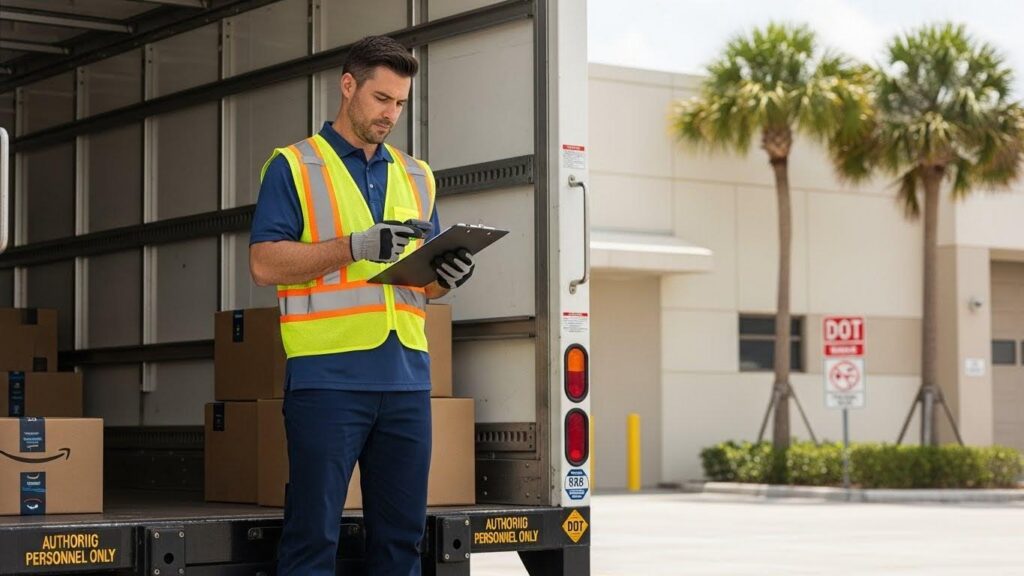
Amazon’s network moves high volumes at high speed. Their risk team tries to avoid gaps that can turn into expensive claims later. That is why Amazon Relay insurance compliance Florida reviews can be strict. Amazon’s insurance requirements are part of its private carrier program, so they can be stricter or more specific than the minimum coverage rules set by the federal government. FMCSA minimums help you operate legally, but Amazon may still require higher limits, certain coverage types, or specific COI/endorsement wording to haul their freight.
Amazon’s Risk Management Model (Scannable Table)
| Risk Type | What Amazon is Trying to Reduce | Typical Examples |
| People risk | Accidents, injuries, third-party liability | Auto collisions, driver/passenger injury, property damage claims |
| Freight risk | Cargo loss or damage while the load is in your care | Theft, temperature damage, water damage, mishandling |
| Paperwork risk | COIs that don’t match the real policy and endorsements | Missing/incorrect additional insured, wrong wording, outdated COI, missing endorsements |
A COI that is “almost correct” can still get rejected.
Why Florida carriers can face closer scrutiny
Florida operating conditions can bring extra attention, especially around:
- Dense metro traffic and higher claim frequency
- Longer operating radiuses across the state
- Cargo theft exposure in certain lanes and parking environments
This does not mean Florida carriers cannot get compliant. It means your documentation needs to be clean and consistent.
Common misconceptions drivers have
- “The COI is the policy.” It is not. A COI is informational and does not change coverage.
- “If my limits are right, I’m good.” Limits matter, but wording and endorsements matter too.
- “If Amazon is a certificate holder, I’m covered.” Certificate holder and additional insured are not the same thing.
Cargo Insurance Limits for Amazon Relay & Last-Mile
Cargo coverage is one of the main areas Amazon reviews because it directly protects the freight while it is in your care. The exact limit can vary by program and lane type, but Amazon typically expects a clear cargo limit shown on your policy and COI. Make sure the coverage applies to the vehicles you are using, includes the commodities you haul, and does not contain exclusions that would block a common delivery claim.
What cargo insurance is meant to cover
Cargo coverage is generally meant to respond when freight is damaged or lost while in your care, custody, and control (subject to policy terms and exclusions). That matters because Amazon loads can include higher-value goods, and Florida’s theft risk has been trending upward nationally.
Typical limit expectations (no guarantees)
Amazon publicly lists minimum insurance requirements for Relay carriers, including cargo coverage of at least $100,000 (along with other required coverages). That does not mean every situation stops at that number, but it is a common baseline drivers see when they search Amazon Relay cargo insurance limits.
Relay vs last-mile delivery (why it can feel different)
Amazon last mile cargo insurance requirements can feel different because the operating model is different:
- Relay linehaul and power-only work often involves trailers, interchanges, and longer hauls, so the insurance review may focus more on auto liability, cargo, trailer-related coverage, and the carrier entity name matching the contract.
- Last-mile delivery can involve smaller vehicles and local routes. Cargo still matters, but the compliance friction is often about the COI details, additional insured wording, and keeping documents current.
If you are searching Florida cargo insurance for Amazon carriers, the key is not just buying a limit. It is making sure the COI and any required endorsements reflect the correct legal entity and coverage types Amazon is verifying.
Certificate of Insurance (COI) Wording Matters

Most “rejections” are certificate problems, not coverage problems.
A COI (often ACORD 25) is issued “as a matter of information only” and does not amend, extend, or alter coverage. If Amazon requires something like additional insured status, it usually has to exist via policy endorsement, not just typed into a certificate box.
Common COI Errors Amazon Flags (COI errors Amazon Relay)
Here are COI errors Amazon Relay carriers commonly run into:
- Wrong legal name: Your COI says “John Smith” but the contract is “Smith Transport LLC.” Even a missing comma or “Inc.” can trigger mismatch checks.
- Entity mismatch across documents: COI shows one company name, policy declarations show another, or your DOT filings reflect a different entity.
- Outdated certificate dates: A new policy term started, but Amazon still has the old COI on file.
- Missing required parties or language: Amazon may expect specific wording in the certificate holder section, or verification that additional insured is handled by endorsement (not just typed into “Description of Operations”).
- Formatting and upload issues: Incorrect form version, missing pages, or a certificate that is cropped so key fields are unreadable.
Practical takeaway: treat the COI like a compliance document. It needs to match the contract entity and the policy, field-for-field.
Additional Insureds and Endorsements Explained
Additional insured means a party is added to your policy in a way that can extend certain protections to them, usually via an endorsement. It is not the same as being a certificate holder.
Important detail many drivers miss
- A certificate can show a name.
- But if additional insured status is required, the policy must be endorsed. The certificate itself does not create that coverage.
Where drivers typically go wrong
- They list Amazon only as the certificate holder and assume that it satisfies “additional insured.”
- They type “Amazon is additional insured” into the COI description box without having the endorsement issued.
- They list the wrong Amazon entity name or address compared to what the onboarding request expects (small mismatches matter in automated reviews).
This section is informational only, not legal advice. The safest move is to have your agent confirm the endorsement exists and that the COI accurately reflects it.
Why Amazon Rejects Insurance Submissions
Many denials are avoidable when you align your COI and endorsements to Amazon Relay insurance requirements Florida carriers commonly encounter. When you see Amazon Relay insurance denial reasons discussed online, they usually boil down to a few buckets:
- Coverage mismatch: Limit or coverage type does not meet the published minimums for Relay.
- Missing endorsement: Additional insured expected, but not properly endorsed.
- Expired or inconsistent documents: Policy renewed, COI not updated. Or the COI effective dates do not match the policy term.
- Entity and name errors: The insured name on the COI does not match the carrier profile or contracting entity.
- Certificate errors: Common certificate mistakes are widely documented, especially when certificates are used as substitutes for policy changes.
Florida-Specific Challenges for Amazon Drivers
Florida is not “hard mode” for everyone, but a few realities can create more underwriting scrutiny and more compliance headaches.
Cargo theft exposure
Cargo theft has been rising nationally, and Florida tracks cargo theft as its own category through FDLE reporting. Even if your operation is clean, theft trends can influence how carriers and brokers view risk, especially for certain commodities or operating areas.
Garaging and operating areas
Underwriting and compliance often pay attention to:
- Where the vehicle is garaged overnight
- Whether you run through ports, rail yards, or dense metro areas
- How often you park loaded (even temporarily)
Documentation scrutiny
When requirements are enforced through systems, small inconsistencies get punished. Florida carriers who operate across multiple cities and lanes often have more moving parts to keep aligned: renewals, vehicle lists, driver updates, and COI revisions.
How to Reduce Amazon Insurance Issues
If your goal is fewer rejections and less back-and-forth, focus on the process. Here is a simple checklist that helps Amazon Relay insurance requirements Florida submissions go smoother.
Work with an agent familiar with Amazon Relay
You want someone who understands how Amazon checks documents for commercial trucking insurance and can spot compliance gaps early, especially around entity naming and endorsements. A small documentation mismatch can still trigger a rejection, so it helps to have someone who deals with Amazon Relay insurance requirements Florida submissions regularly.
Review COIs before submission
Before uploading, confirm:
- Insured legal name matches your contracting entity exactly
- Policy numbers and effective dates are current
- Limits meet Amazon’s published minimums for Relay (where applicable)
- Any “additional insured” requirement is supported by an actual endorsement, not just certificate text
Keep documentation consistent and current
Renewals are where things break most often. Set a routine:
- Update COIs immediately on renewal
- Keep a single “source of truth” folder for COIs and endorsements
- Re-check your Amazon profile entity name against your COI
Get Help Reviewing Your Amazon Insurance
If you’re stuck in a reject-and-resubmit loop, Terra Insurance can help you make your submission cleaner and easier to review. We will check that your business name matches across your policy and COI, confirm your limits and endorsements are shown correctly, and fix common COI issues like formatting, dates, and renewal timing. We cannot promise approval, and this is not legal advice, but we can help you reduce avoidable mistakes so you can submit with more confidence.