
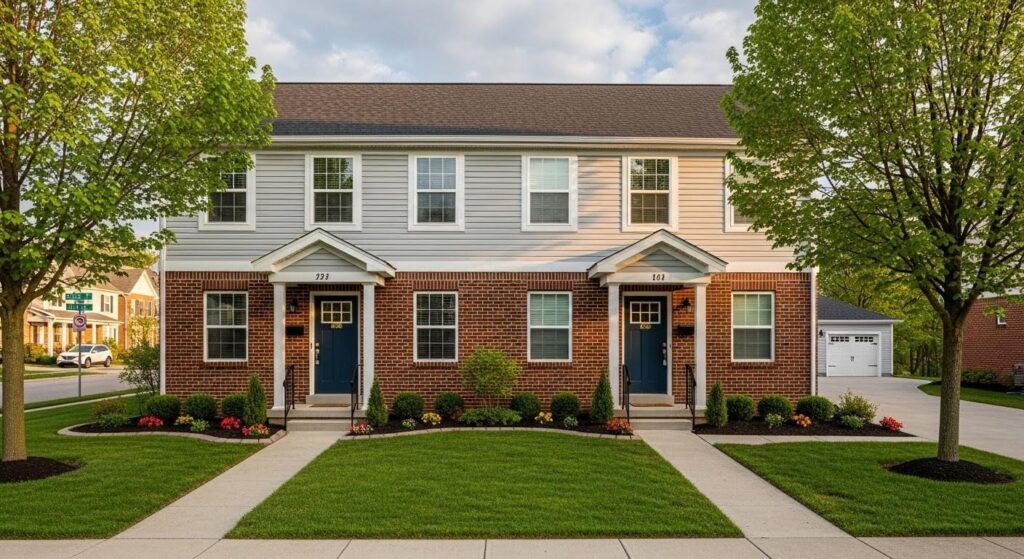
Owning a duplex can look straightforward until problems affect more than one unit. A leak can spread, a tenant may get injured, or a storm can interrupt rental income. That is why rental property insurance matters for duplex owners. For landlords in Delaware County, Philadelphia, nearby Pennsylvania suburbs, and South Jersey, the policy should reflect that the property is a rental, not just a home.
Rental property insurance for duplexes and small multifamily buildings helps protect against risks not covered by standard homeowners insurance. Policies often include property coverage, liability protection, and loss of rental income protection designed for properties with two to four units.
Why Duplex and Small Multifamily Properties Need Specialized Insurance
A duplex is not simply a house with an extra unit. Once tenants move in, the level of risk changes. More people use the property, which increases the chances of accidents or damage. One problem can affect more than one household.
That is where landlord insurance becomes important. Terra explains that its Philadelphia landlord coverage is designed for rental owners, including multi-unit property owners and real estate investors. It highlights protection for property damage, liability, loss of rental income, and tenant-related risks.
Pennsylvania’s Insurance Department explains that homeowners insurance protects your home and may help with lawsuits if someone is injured. That sounds broad, but it is still a homeowners policy. Once the property is rented, the occupancy and liability picture usually looks different from when the owner lived there full-time.
That is especially important for first-time landlords. If you are buying a duplex, converting a former residence, or managing a small multifamily building, your insurance should reflect how the property is used. In PA and South Jersey, there needs to be accounting for shared areas, multiple tenants, separate leases, and the property’s income side as well.
What Rental Property Insurance for Duplexes Typically Covers

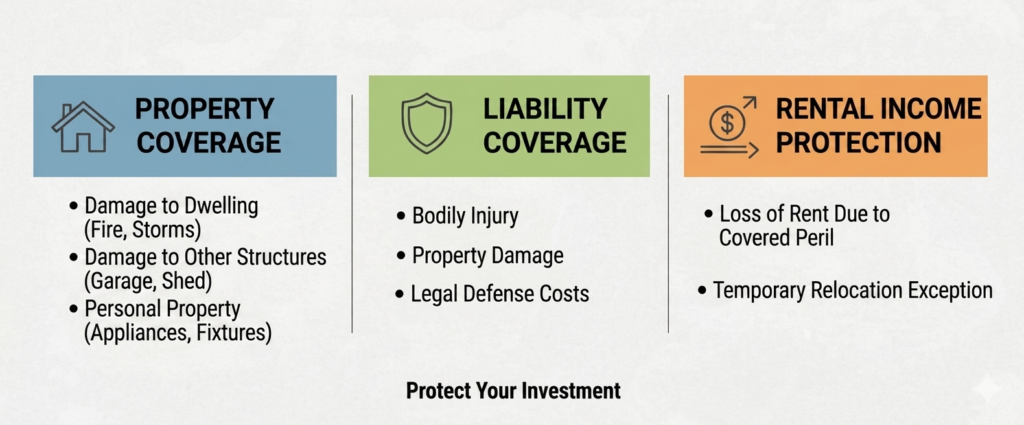
Most rental property insurance for duplex properties is built around a few core protections. The exact policy can vary, but the main parts are usually straightforward and easy to understand
- Dwelling Coverage: Helps protect the building after a covered loss.
- Liability Protection: Helps if a tenant or visitor claims injury or damage.
- Loss of Rental Income: Helps replace rent if a covered event makes units unlivable.
- Other Structures Coverage: May apply to garages, fences, sheds, or similar features.
Terra’s landlord and rental property pages describe coverage in similar terms. These include building protection, liability coverage, and rental income support. That is why duplex insurance should be treated as rental coverage, not a slightly adjusted homeowners policy.
A good rule of thumb is simple. If the property generates rent, the insurance review should start from that fact. This becomes more important when the buildings have two to four units.
Insurance Considerations for 2–4 Unit Rental Properties
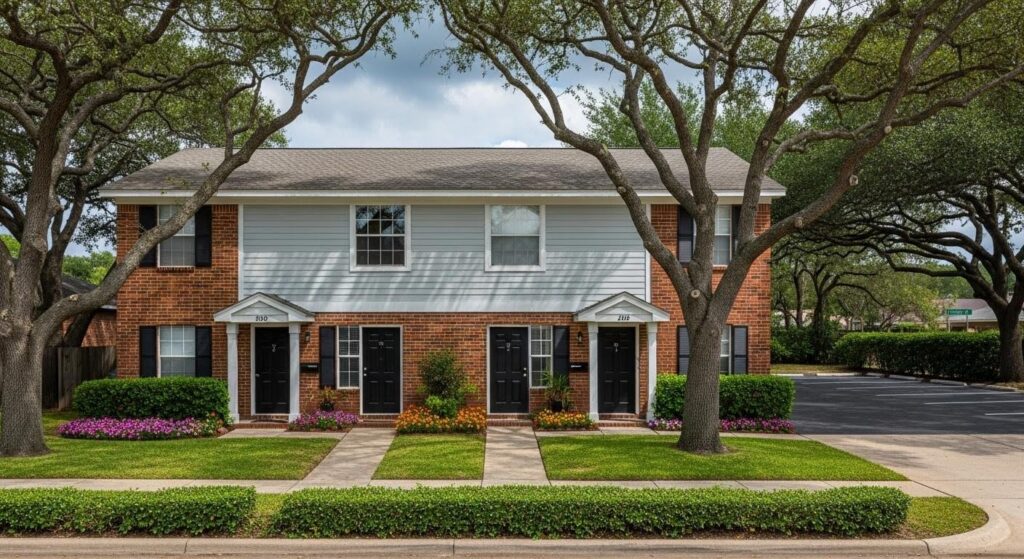
Insurance for 2–4 unit rental properties often requires more planning than expected. Even when the building is relatively small, the risk can be increased because multiple households may rely on the same structure, systems, and access points.
Multiple tenants are the first factor to consider. More tenants usually mean more visitors, more daily wear, and more opportunities for one issue to affect several people at once. A loose railing or leaking pipe can become a broader problem in a duplex than in a single-family rental.
Shared systems also increase risk. Some small multifamily buildings share plumbing, heating, electrical service, laundry areas, porches, or common exterior steps. When those systems fail, the impact can spread more quickly and affect multiple leasees.
Property age is another factor. Many duplexes and older converted homes in Pennsylvania and South Jersey were built decades ago. That can raise concerns about roofing, wiring, plumbing, exterior stairs, drainage, or older materials that may need updates.Older properties may also require additional requirements. HUD provides landlord resources and forms, which are useful when owners need guidance on rental housing documentation. That is particularly relevant for landlords managing older units or preparing properties for new tenants.
Common Risks Landlords Face With Duplex and Small Multifamily Properties
The most common risks are usually everyday issues. They arise when several households share one property.
One of the most common is a liability claim. A tenant slips on the ice or a visitor may trip on damaged steps. These situations show why insurance should be reviewed before a problem occurs.
Property damage is another concern. Fire, burst pipes, storm damage, vandalism, and tenant-caused damage can affect multiple units at once. Terra’s landlord page specifically lists hazards like fire, vandalism, storms, tenant injuries, and legal claims as core concerns for rental property owners.
Vacancy can also create pressure. A vacant unit already affects income. If a covered loss knocks out two or more units, the cash flow impact can be much greater. That is where loss-of-rental-income protection becomes more than a nice extra. It becomes practical.
Maintenance problems round out the list. Roof leaks, plumbing failures, electrical issues, drainage problems, and worn exterior features all become more serious when several households depend on the same building. That is why rental property insurance for duplex buildings needs to be matched with solid upkeep and regular inspections.
How Insurance Costs Are Determined
Insurance pricing depends on several factors, not just one. For landlords, it usually reflects location, building condition, occupancy, and claims history. Understanding these factors helps owners have better discussions about coverage.
Location matters for obvious reasons. Rebuild costs, local claim trends, weather exposure, and local property characteristics can all affect how an insurer looks at a building across Philadelphia, Delaware County, Montgomery County, Bucks County, Camden County, Gloucester County, or Burlington County. Terra’s rental property insurance page also notes that coverage is often customized around the needs and risks of the property.
The age and condition of the building matter too. Older roofs, aging plumbing, outdated wiring, and deferred maintenance can change how the risk is viewed. Renovations and system updates can matter in the other direction.
Occupancy also affects pricing. An owner-occupied duplex may not be viewed the same way as a fully tenant-occupied building. The number of units, lease setup, and prior claim activity all influence the final cost.This is one reason it helps to look at the property in the broader context of business insurance. Terra notes that it offers personal, business, and life insurance, plus landlord and rental-related products, which can be useful for owners who want to review their risks more comprehensively.
Landlord Insurance Requirements in Pennsylvania and South Jersey
In Pennsylvania, homeowners insurance is not required by state law, but the Pennsylvania Insurance Department says most banks or lenders require coverage for at least the amount of the mortgage. New Jersey’s Department of Banking and Insurance gives similar guidance and notes that mortgage lenders require homeowners insurance because they have a major investment in the property.
For landlords, that does not mean every policy is automatically enough. A lender may require insurance, but the owner still has to make sure the policy fits the way the building is used. If the property is a duplex, triplex, or small multifamily rental, the real question is whether the coverage matches tenant occupancy, liability exposure, and potential rent loss.
There can also be compliance factors beyond the mortgage. Depending on the municipality and the building type, landlords may need to pay attention to rental registration, local inspections, and disclosure requirements. In South Jersey, that can be particularly important for non-owner-occupied one- and two-unit rentals and for buildings with three or more units.
How Terra Insurance Helps Rental Property Owners
Small rental property owners often need more than a quote. They need help deciding what type of protection actually fits the building they own or plan to buy.
On its site, Terra says it serves rental property owners, multi-unit property owners, and investors. It offers tailored landlord and rental property coverage for the greater Philadelphia area and nearby states. The goal is to help clients understand risk and choose appropriate coverage.
That makes the conversation more useful for first-time investors and experienced landlords. A duplex in Delaware County may need a different approach than a four-unit building in Camden County or a converted rental in Bucks County. Property condition, occupancy, and income risk all influence the discussion.Landlords who want a broader starting point can also review Terra Insurance to see the range of policies the agency handles and the markets it serves. That can be helpful when the property is only one piece of a larger investment or business plan.
Protect Your Duplex or Small Rental Property
If you own a duplex, are buying your first triplex, or are converting a property into a small rental building, now is a good time to review the coverage before a claim tests it. The next step is to contact Terra Insurance and request an insurance quote based on the way the property is actually used. Terra’s contact page lists its Philadelphia office and invites customers to reach out for help reviewing their risks and coverage needs.
A rental property can be a strong long-term asset, but only if the protection keeps pace with the real risks. The goal is not just to carry insurance. It is to carry coverage that fits the building, the tenants, and the income that the property is meant to produce.